
Iran Moves Ballistic Missile Production Underground After US and Israeli Strikes
Iran continues to expand its underground infrastructure, likely for ballistic missile production, despite extensive damage to its main missile facilities from US and Israeli strikes.
This is according to a study by the US Foreign Policy Research Institute (FPRI), based on an analysis of satellite imagery of three major missile complexes: Parchin, Khojir, and Shahrud.
Solid rocket fuel production facilities at all three sites remain inoperable following Operation Epic Fury. Large amounts of debris from destroyed structures are still scattered across the sites, and the restoration of production equipment has made virtually no progress.
Meanwhile, activity was observed near an underground tunnel complex at the Shahid Boroujerdi site, near Parchin. Despite damage to some of the tunnels, Iran quickly rebuilt an auxiliary building and filled in craters left by strikes involving penetrator munitions.
Satellite imagery of the site also revealed containers approximately 5 to 13 meters long that may be used to store or transport missiles.
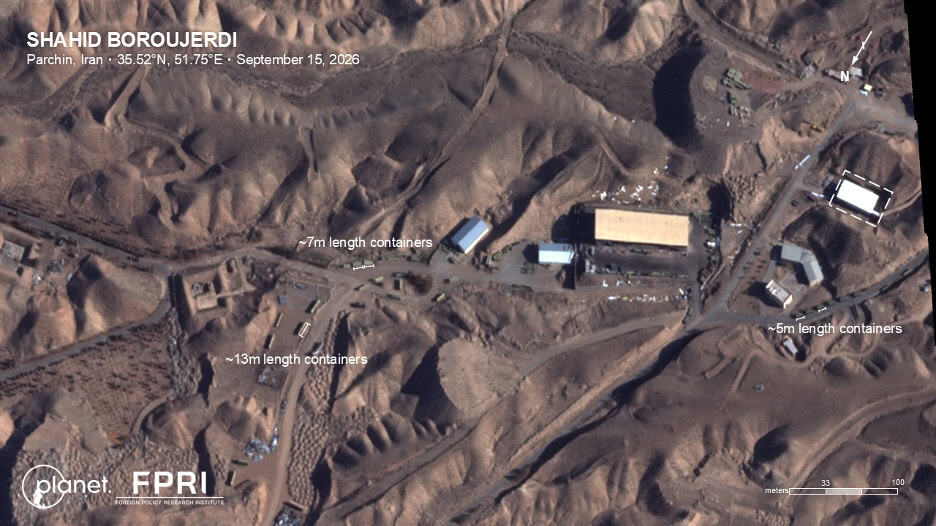
Analysts suggest that the underground complex may have been used to manufacture or assemble missile weaponry.
At another major site in Khojir, much of the production infrastructure remains destroyed, while several entrances to the Shahid Movahed underground complex remain blocked.
The lack of visible activity has led researchers to question whether missiles are currently being assembled there.
Meanwhile, in Shahrud, Iran continues construction of a new tunnel complex. Work began in fall 2024 with the construction of two entrances into the mountain range, and following Operation Epic Fury, a third entrance was likely started.

These tunnels could be used to move critical production processes underground.
FPRI analysts note that it is difficult to determine the exact timeline for the resumption of Iran’s missile production. However, if resources are concentrated at a single facility and specialized equipment is available, Iran could potentially resume operation within a year.
Militarnyi previously reported that in May 2026, US and Israeli intelligence agencies said Iran had resumed limited production of ballistic missiles and launchers. Tehran was using stockpiled components, repaired production lines, and undamaged facilities.


