
Russia Demands Explanation From Netherlands Over Activities in Ukraine of Destinus, Manufacturer of Ruta Missiles and Da Vinci Drones
Russia is demanding an explanation from the Netherlands over the activities in Ukraine of Destinus, the manufacturer of Ruta cruise missiles and long-range Lord drones, known in Ukraine as Da Vinci.
The Russian Embassy in the Netherlands announced this, requesting an explanation from The Hague regarding the extent to which the country’s authorities were informed about the activities of Destinus employees in Ukraine.
The statement followed an investigation by Dutch outlet NRC, published on November 19. Journalists spent several months investigating Destinus, interviewing more than 40 current and former employees, investors and experts, and examining internal documents, correspondence, photographs and videos.
According to NRC, company employees worked in Ukraine with strike drones and interceptor drones. The newspaper claims that, in some cases, their activities went beyond routine technical consulting.
Da Vinci Launches in 2023
One such incident occurred in early June 2023 near Kharkiv. Destinus employees travelled there to test Da Vinci strike drones, which had been fitted with explosives and prepared for a flight towards a military airfield near Voronezh, approximately 180 km from the border.
According to NRC, Ukrainian troops did not yet know how to set the destination and operate the new system, so Destinus representatives directly assisted in preparing the drones.
That same morning, on June 9, 2023, an unidentified drone struck an apartment building in Voronezh. Three people were injured by flying glass fragments.
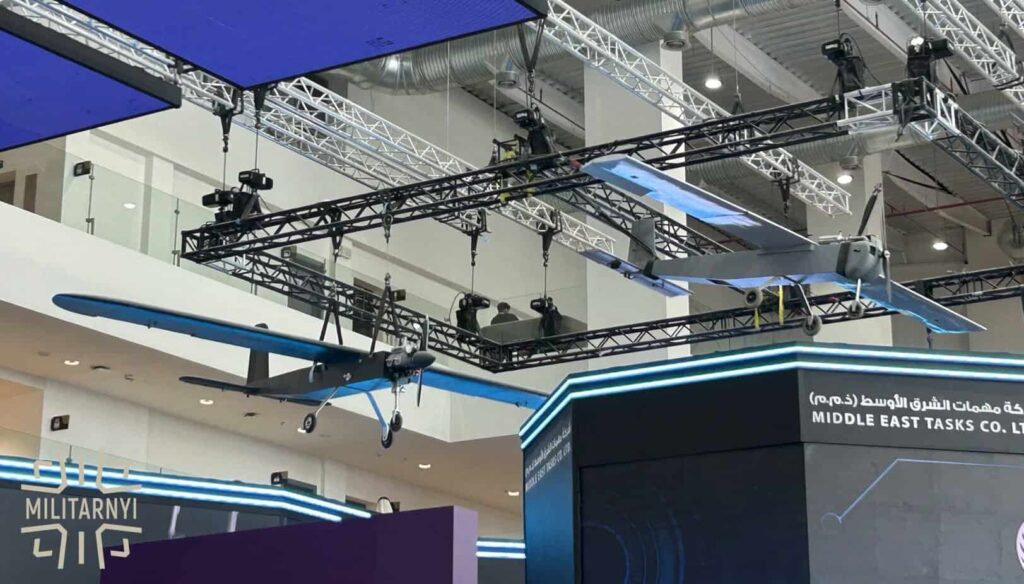
Some Destinus employees suspected that the drone may have been one of their own. However, the Da Vinci had no ground communication link or camera, so NRC was unable to establish conclusively where the test drone had ended its flight.
Destinus denies conducting its own combat operations. The company’s founder, Mikhail Kokorich, told NRC that the Ukrainian side determines the targets and makes decisions on combat use, while company employees provide technical support in accordance with their contracts.
Hornet Against Shaheds
Another part of the investigation concerns the Hornet interceptor drone, which Destinus developed to counter Russian attack drones.
In fall 2024, an international team of company employees arrived in Ukraine to test the Hornet.
The interceptor, weighing approximately 9 kg, was designed to pursue an enemy UAV and destroy it by detonating its warhead.
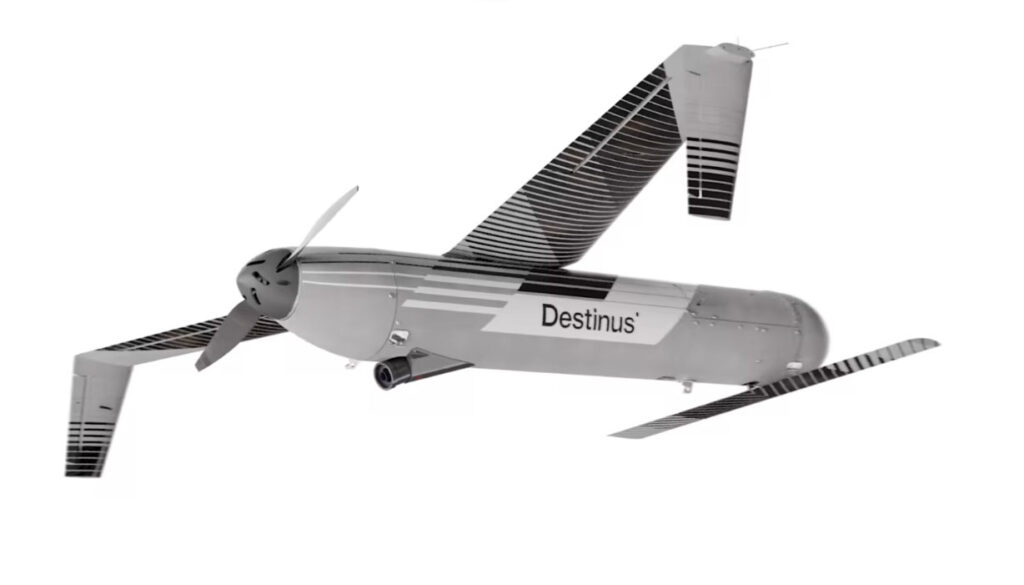
The tests were plagued by numerous technical problems. According to internal correspondence obtained by NRC, the drones lost GPS signals and radar connectivity, experienced issues with their engines, modems, batteries and autonomous control systems, while some crashed.
Despite this, the project’s management sought to move beyond routine testing towards actual interceptions of Russian targets. In their correspondence, employees discussed hunting down Geran drones and Orlan reconnaissance UAVs.
Destinus confirmed to NRC that its employees in Ukraine independently launched and operated Hornet drones against actual Russian Gerans. The company stressed, however, that the interceptors were fitted with inert warheads and that the flights were conducted under the supervision of Ukrainian military personnel.
NRC found no confirmed case of a Geran drone being successfully intercepted by a Hornet. The outlet’s sources were also unaware of any video footage of such interceptions, despite the tests having continued for months.
Ultimately, Ukraine decided not to purchase the Hornet and instead developed its own interceptor drones. According to Kokorich, Destinus discontinued development of this Hornet version for Ukraine, although the company states it is producing the system for other customers.
Meanwhile, the Netherlands has commissioned the development of a new version of the interceptor for its navy, which is to be adapted for launch from frigates. The programme’s total budget is estimated at €250 million to €1 billion.
In addition, in 2026, the Dutch government ordered 700 Ruta cruise missiles manufactured by Destinus for Ukraine, in a deal worth €250 million. The company also stated that Ruta missiles and Da Vinci drones had been used in a recent Ukrainian operation against the Crimean Bridge.
Legal Matter
International humanitarian law experts interviewed by NRC believe that operating weapons against a party to an armed conflict or directly assisting in an attack could qualify as direct participation in hostilities by a civilian.
In such cases, civilians may lose the protection from attack afforded to them under international humanitarian law for the duration of their direct participation in hostilities.
The Dutch Ministry of Defence also told NRC that activities involving the direct use of a weapons system against a party to a conflict are considered direct participation in hostilities. However, general training in the use of such a system does not fall into this category.
The Russian Embassy used these very findings in its statement, demanding that The Hague clarify the extent to which the state was aware of Destinus’s activities.
Prime Minister of the Netherlands Rob Jetten dismissed Russia’s claims, saying they should not be taken too seriously. He also pointed to Russia’s invasion of Ukraine and its violations of international law.
Militarnyi previously reported that Ruta cruise missiles and long-range Da Vinci drones were used in strikes against the Crimean Bridge.
According to Destinus, the Ruta missiles struck the bridge, while the Da Vinci drones were used to suppress Russian air defense systems.


