
Partners’ Tactics Failed: F-16 Pilots Forced to Adapt Combat Rules to the Realities of the War in Ukraine
The air combat tactics Ukrainian pilots were taught during their F-16 training proved unsuitable for the realities of the Ukrainian battlefield. The pilots had to develop their own strategies for combat near the front lines.
One Ukrainian F-16 pilot shared this in the Air Force’s video report.
“When we returned home from training, we faced the reality: the tactics we were taught abroad didn’t quite match the war we’re fighting. These tactics were based on the kinds of wars our partners had fought in before. But this war is fundamentally different,” the pilot explained.
He added that most pilots in the first groups had significant experience, and after returning, they had to develop new tactics, such as destroying cruise missiles, engaging drones, and engaging the enemy near the front lines.
“We had to sit down and figure out how to destroy cruise missiles, attack drones, and how to fight the enemy close to the front lines,” the pilot said.
According to the pilot, the front line is heavily guarded by enemy surface-to-air missile systems and aircraft. The biggest threat comes from Russian fighter jets, such as the Su-35, Su-57, and MiG-31. Almost every mission to the front line involves enemy missiles targeting Ukrainian aircraft, most often air-to-air missiles.
“They can stay in standby mode, waiting for our groups to fly in at high altitudes. Unfortunately, we don’t have that advantage. Because of this, we have to fly lower to avoid the threat from surface-to-air missile systems,” he explained.
To avoid enemy attacks, Ukrainian pilots use maneuvering tactics at low altitudes. This makes it harder for enemy radars and missile guidance systems to lock onto and track them, because the ground creates a lot of background noise and blocks clear radar signals.
Sometimes, F-16 pilots in the escort group—who are protecting planes carrying precision bombs for strike missions—intentionally expose themselves to enemy aircraft. This forces the enemy to fire missiles at them, which helps “waste” the enemy’s missile stock and creates an opportunity for the strike aircraft to deliver its bombs.
“But the biggest challenge for us was the enemy air threat, which kept us from getting to the target. We worked in a group of three planes and forced the enemy to launch two missiles from different directions. As a result, we gave our strike plane the chance to destroy the target and let the whole group return safely to the airfield—back to our families and squadron,” the pilot recalled about one such mission.
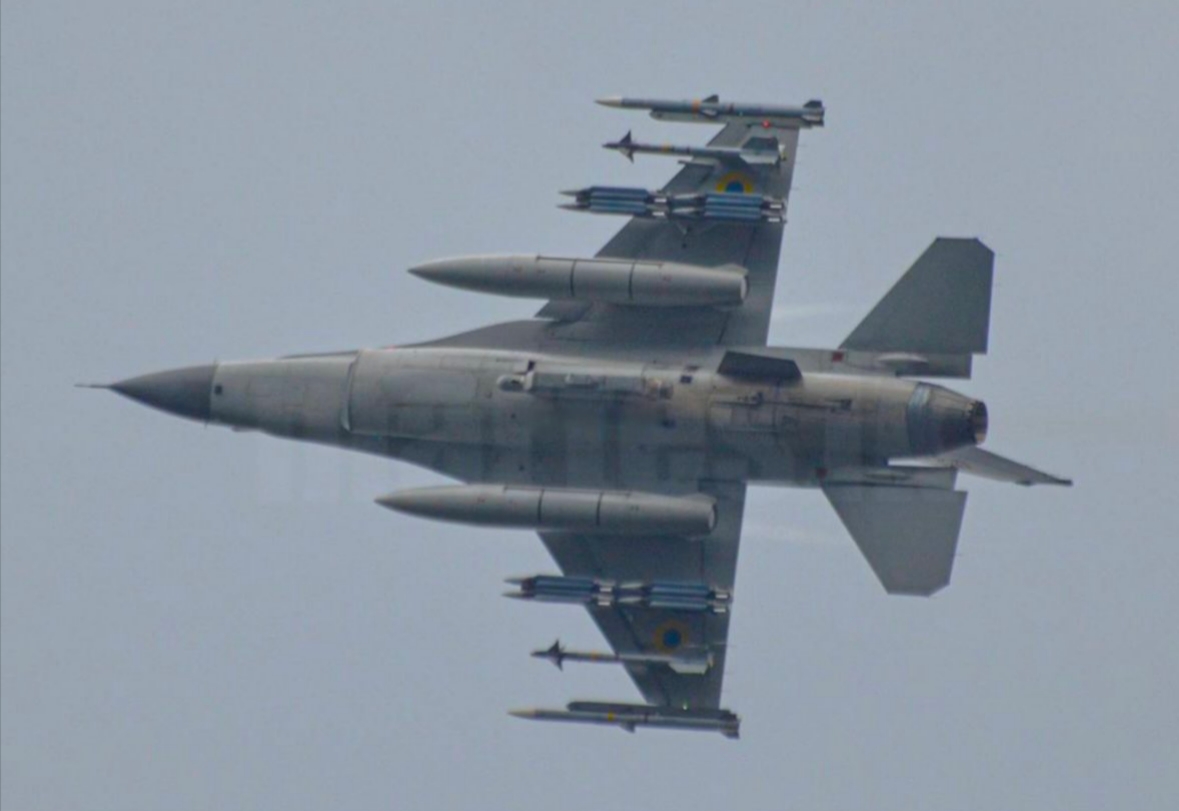
As of November 2025, Ukrainian F-16 fighter jets have intercepted over 1,300 Russian missiles and drones during their service. There was also a notable incident when a Ukrainian F-16, for the first time in the world, shot down six Russian cruise missiles in a single combat sortie—two of them using its cannon.
In addition, as of November, Ukrainian F-16s have destroyed over 300 ground targets, including “hundreds of pieces” of enemy equipment, command posts, UAV control stations, ammunition depots, and logistical facilities of the enemy.


